
He asked for a laptop with 8GB RAM. They sold him 4GB, at the 8GB price.
A student walks into a computer market to buy his first laptop. The shopkeeper swaps the sticker, not the machine, and charges him for parts that were never inside the box.
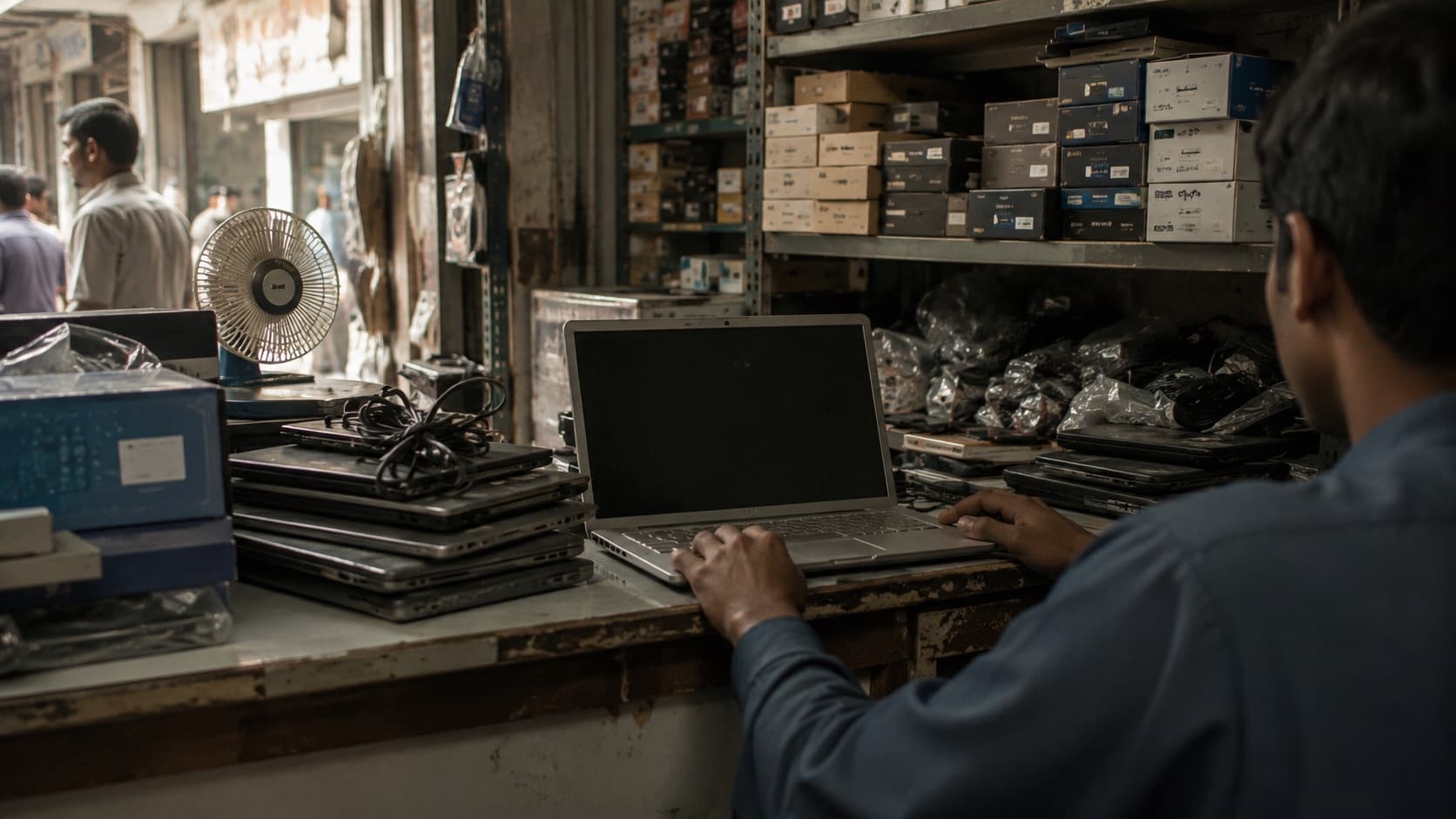
Bilal saved for eight months to buy his first laptop. He needed it for university: assignments, video calls, research.
He picked a busy computer market and found a shop with a friendly owner. He asked for one thing: 8GB of RAM. That is the part of a computer that lets it run several programs at once, without slowing down. He wanted enough to keep several tabs and a video call open together.
"Yes, yes, 8GB, brand new, best price for you, brother."
The shopkeeper talked fast. He wrapped the laptop before Bilal could turn it on. He waved off every question with a joke or a compliment.
Bilal paid. He went home happy.
Bilal is not a real person. This story is put together from scam reports that repeat, again and again, in Pakistani computer markets. The pattern is real.
The laptop was slow from day one
Within a week, Bilal's laptop struggled to keep even two windows open. Video calls froze. Assignments took forever to save.
He asked a friend who studies computer science to look at it. His friend opened the system information screen, a built-in setting on every computer.
It showed 4GB of RAM. Not 8GB.
Bilal had paid the price of an 8GB machine for a 4GB one. The shopkeeper never showed him this screen. He never printed a proper invoice listing the real specifications. He only said a number out loud, fast, before Bilal could ask again.
Why this scam works
Two reasons make this so common in computer markets.
- Most buyers don't know they can check. The real specifications are always visible on the machine itself, in under a minute, but almost nobody asks to see that screen before paying.
- Confidence sounds like proof. A shopkeeper who speaks quickly and confidently feels trustworthy in the moment. But confidence is not evidence. Only the screen itself, or a real invoice, is evidence.
This is not only a laptop problem. The same swap happens with phone storage, power bank capacity, and RAM sticks sold separately. It works anywhere a number can be said out loud without being shown.
The two-minute check that protects you
Do this before you pay for any laptop, phone, or electronic device. Do it in the shop, with the shopkeeper standing next to you.
- Ask him to turn the device on.
- On a laptop, right-click the Start button and open "System." It shows the real installed RAM.
- Compare that number to what he told you.
- Ask for a printed invoice that lists the exact specifications, not just a price.
A shop selling what it claims to sell will do this without hesitation. A shop that hesitates, rushes you, or gets defensive is telling you something important.
What Bilal did next
Bilal went back to the shop with his friend and the system information screenshot. The shopkeeper argued at first, then agreed to a partial refund once he realized Bilal had proof.
Not every story ends this well. That's why the check has to happen before you pay, not after.
Frequently asked questions
How can I check my laptop's real RAM myself?
On Windows, right-click the Start button and choose System. It shows installed RAM in a line marked 'Installed RAM.' Do this in the shop, before you pay, with the shopkeeper watching.
What if the shop won't let me check the laptop before buying?
Walk away. A shop selling a real, correctly-specified laptop has nothing to hide. Refusing to let you check is the clearest red flag there is.
Is it only laptops, or do other electronics get this treatment too?
The same trick happens with phones (swapped storage chips), power banks (fake capacity numbers), and RAM sticks bought separately. Always verify the actual specification on the device itself, not just the box or sticker.
Can I still get my money back after I've already paid?
It's harder, but not impossible. Go back with your invoice and ask for a correction or refund. If the shop refuses, report it to your local consumer protection office and bring your invoice as evidence.
Are all electronics shops like this?
No. Most shopkeepers are honest. This article is about the pattern to watch for, not an accusation against every shop. Verifying specifications takes two minutes and protects you either way.
Send this to someone who needs it.
Has this happened to you or someone in your family?
Share your story anonymously. We'll publish only the lesson, never your name. It could save someone else's parents.